Digital Knit Backrests: Cooler, Adaptive Support Science
By Anika Sethi • 11th Dec

Today's knowledge workers need seating solutions that keep pace with their dynamic workstyles. Digital knit backrest technology and advanced ergonomic seating materials represent a significant leap forward in addressing the persistent challenges of heat buildup, static posture, and poor spinal support that plague traditional office chairs. By leveraging the inherent properties of knitted textiles (precision-engineered at the stitch level) these innovations create seating surfaces that respond to movement rather than resist it, offering a fundamentally different approach to ergonomic support.
Understanding the Material Science of Digital Knit Backrests
Digital knitting technology creates seamless textile structures where each stitch is individually controlled during manufacturing. Unlike traditional cut-and-sew methods or even standard mesh backs, this process allows for intentional variations in stitch density, tension, and pattern throughout the fabric. As evidenced by textile engineering research, these controlled variations create three distinct functional zones within a single backrest:
- High-density zones for structural support at critical spinal contact points
- Medium-density zones that provide graduated transition areas
- Open-stitch structures specifically engineered for optimal breathability
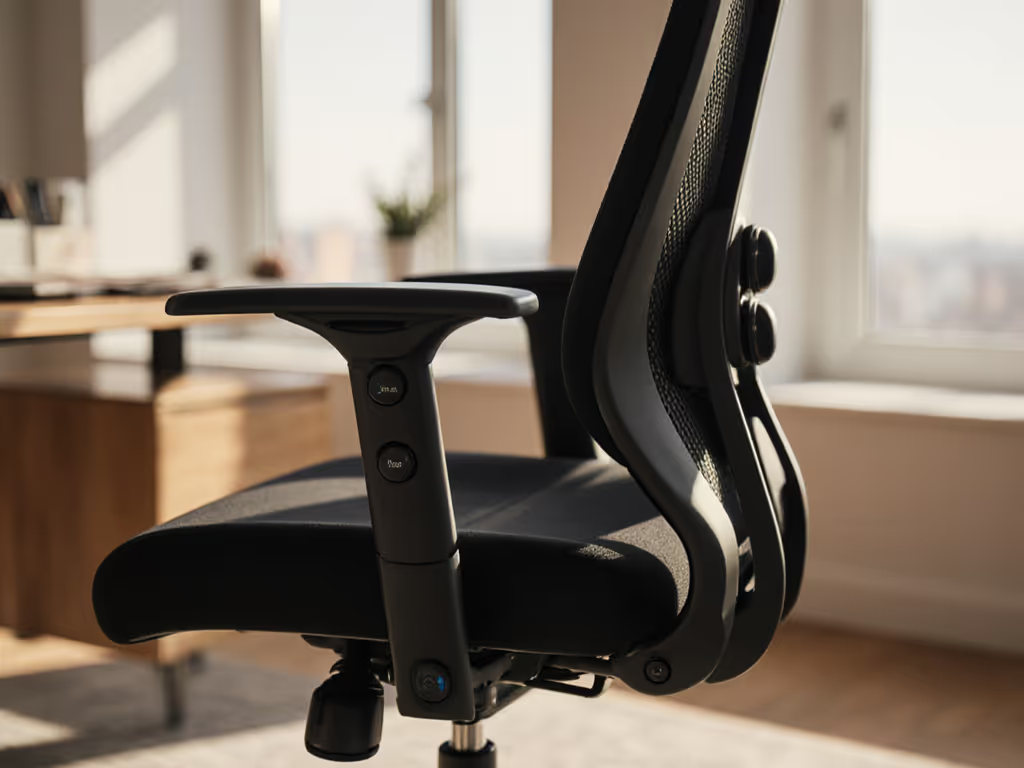
The interconnected nature of knitted textiles gives them remarkable longitudinal sensitivity, meaning they respond to subtle changes in spinal curvature. When you shift positions, the fabric stretches and contracts with your movements rather than creating resistance points. This property is what makes digital knit backrests particularly effective for posture monitoring applications, as demonstrated in recent biomechanics studies where knitted sensors detected spinal alignment changes through hydraulic pressure variations.
Knit vs Mesh Comfort: An Evidence-Based Comparison
When evaluating knit vs mesh comfort, traditional thinking has positioned mesh as the unquestioned leader in breathability. While mesh does offer excellent airflow, it often sacrifices supportive structure, creating what researchers call "the hammocking effect," where the fabric stretches excessively under body weight, compromising lumbar alignment. For a deeper look at how mesh materials manage airflow and heat, see our technical guide to mesh temperature control.
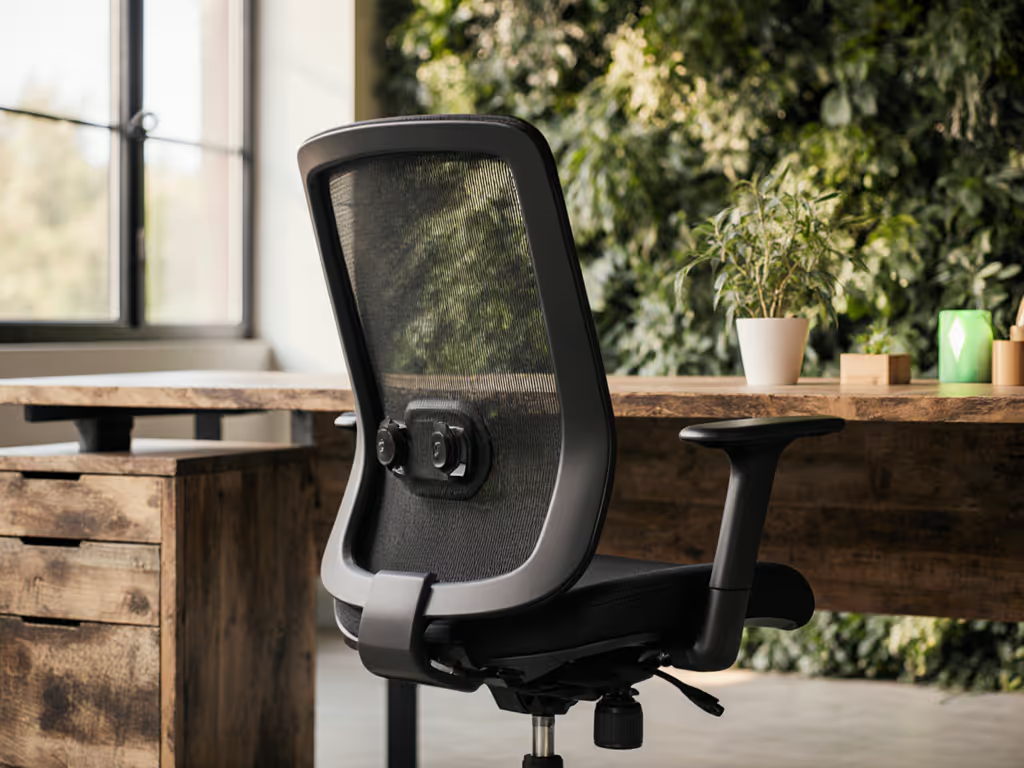
Digital knit technology bridges this gap with its engineered approach. By strategically placing open-stitch structures in sweat-prone areas (like across the shoulder blades and lower back), these materials achieve comparable breathability to mesh while maintaining consistent support. A recent textile performance study showed that well-designed digital knits reduced heat index scores by 28% compared to traditional upholstery fabrics, though they still lag behind premium mesh by approximately 15% in maximum airflow scenarios.
The key differentiator lies in how these materials handle movement. Where mesh tends to distort asymmetrically when users shift positions, digital knits maintain structural integrity through their interconnected loops. This creates what biomechanics researchers describe as "dynamic conformity," the fabric's ability to maintain consistent contact with the spine regardless of posture.
How Digital Knit Supports Natural Movement Patterns
My work in movement ergonomics continually reinforces that bodies thrive on variability. The most effective chairs don't enforce perfect posture; they make movement so effortless that micro-adjustments happen naturally throughout the day. Digital knit backrests excel here through several key mechanisms:
- Variable resistance zones that gently guide spinal alignment without restricting movement
- Longitudinal stretch properties that accommodate spinal elongation during recline
- Structural memory that returns to neutral position without requiring manual adjustment
I recall working with a software developer who struggled with hip tightness after transitioning to standing desks. While standing seemed like the solution, we discovered her real need was more movement variation while seated. By switching to a chair with responsive back support that enabled subtle shifts without losing alignment, her discomfort decreased significantly within days. Her experience underscored a principle that now guides my work: enable movement first. To understand the biomechanics behind this, read our spinal motion science explainer.
This movement-first approach addresses a critical pain point for many knowledge workers, the stiffness that builds during long sessions when chairs discourage micro-movements. Traditional rigid backs create what ergonomics researchers call "postural locking," where users subconsciously avoid movement to maintain comfort within the narrow supported range.
Sustainability and Performance Benefits
Beyond immediate comfort, advanced ergonomic seating materials like digital knit offer substantial sustainability advantages. The zero-waste production process (where fabric is created precisely to shape rather than cut from larger rolls) reduces material waste by up to 30% compared to traditional upholstery methods. For broader context on eco-friendly materials, certifications, and lifecycle analysis, see our guide to sustainable ergonomic seating. This efficiency extends to energy consumption too; studies indicate digital knitting operations consume approximately 43% less energy than conventional textile manufacturing processes.
Durability is another often-overlooked benefit. Without seams that can fray or mesh that can sag over time, well-constructed digital knit backrests maintain consistent performance throughout their lifecycle. This is particularly valuable for users at the extremes of standard sizing ranges (both petite and taller individuals), who often experience accelerated wear in standard chairs that don't accommodate their proportions.
Optimizing Your Digital Knit Seating Experience
To maximize the benefits of digital knit backrest technology, consider these evidence-based adjustments: If recline feels confusing, our breakdown of optimal recline angles shows how different degrees affect disc pressure and focus.
- Seat depth positioning: Ensure your thighs make full contact with the seat without pressure behind the knees, creating a stable base that lets the backrest work effectively
- Recline rhythm: Set your tension to allow gentle recline with minimal effort, encouraging 5-10 degree shifts every 15-20 minutes
- Armrest alignment: Position arms so shoulders remain relaxed, reducing upper back strain that can compromise backrest contact For armrest choices that reduce shoulder load during typing, compare 4D vs 3D armrests.
For users concerned about heat buildup during extended sessions, combining digital knit with strategic ventilation techniques (such as periodic recline breaks that create airflow between back and chair) proves more effective than seeking maximum breathability alone. Remember that breathable seating technology works best when integrated with movement patterns rather than viewed as a standalone solution.
The Future of Adaptive Seating
As material science advances, we're seeing promising developments in digital knit backrest technology that will further enhance its ergonomic value. Current research explores integrating responsive yarns that change tension based on body temperature, and precision-engineered zones that provide targeted support based on individual spinal curvature patterns.
For knowledge workers seeking solutions beyond the limitations of traditional ergonomic backless chair designs or static mesh supports, digital knit represents a thoughtful middle ground. By prioritizing movement variability over rigid posture enforcement, these advanced materials support the body's natural tendencies rather than fighting them.
Movement is medicine; chairs should enable it, not restrain it.
To explore how these innovations might fit into your specific work environment, consider consulting recent independent textile performance studies that compare airflow metrics, durability testing, and user feedback across different digital knit implementations. The most effective seating solution will always be one that supports your unique movement patterns while addressing your specific environmental and physiological needs.
Related Articles