Outdoor Ergonomic Chairs: Weather-Ready Setup
By Amina Yusuf • 23rd Feb
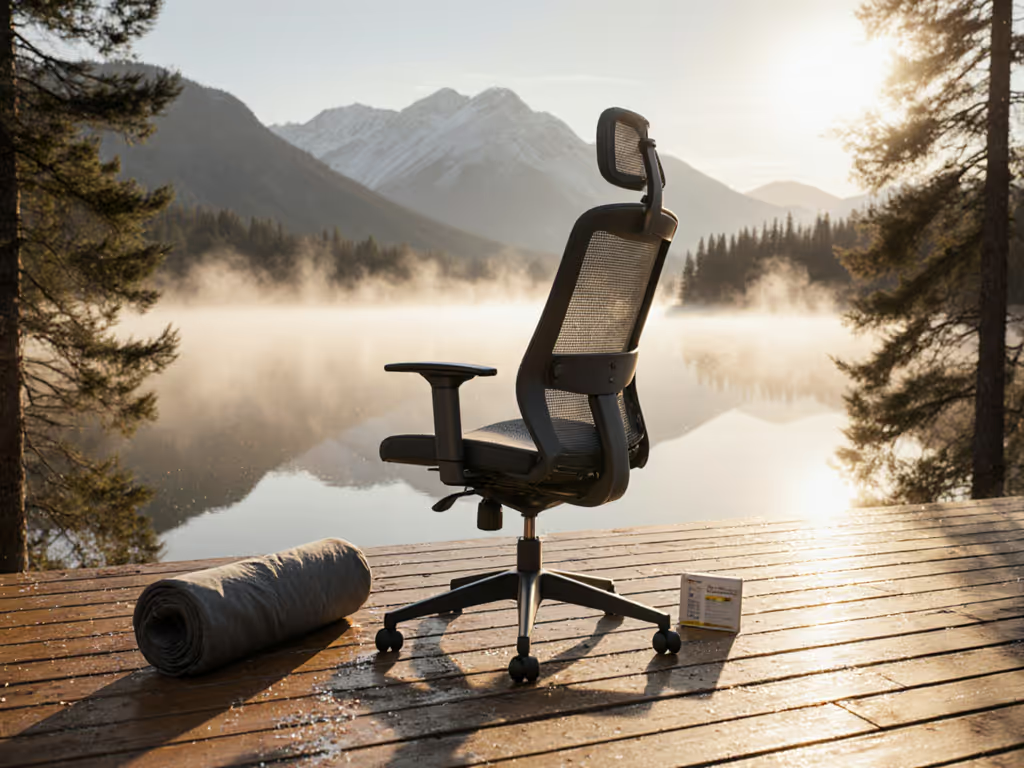
Working outdoors (whether at a balcony desk, a park coworking session, or a backyard office) has become routine for many knowledge workers. But outdoor ergonomic chairs and patio office seating face a dual challenge: they must deliver the same postural support and adjustability as indoor task chairs while surviving sun, moisture, temperature swings, and UV radiation. This FAQ dives into how to audit, evaluate, and select a weather-resistant work chair that performs for years, not seasons.
What's the Real Difference Between Indoor Task Chairs and Outdoor Ergonomic Ones?
The fundamental ergonomic principles (lumbar support, seat-depth fit, arm geometry, recline dynamics) remain identical. The divergence lies in material robustness and maintenance overhead.
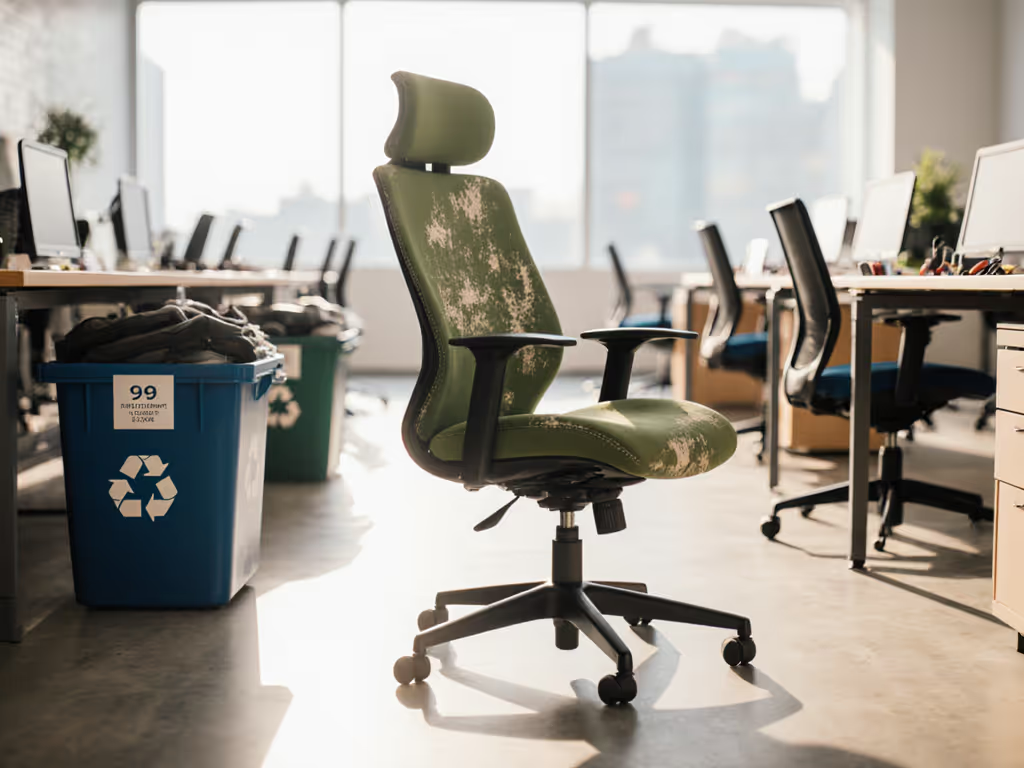
Indoor chairs tolerate conventional upholstery and steel frames because the environment is controlled. Outdoor chairs must combat moisture infiltration, UV-induced material brittleness, salt spray (if coastal), and thermal cycling that stresses fasteners and foam.
A chair designed for outdoor use should employ materials that resist fading, resist mold, and maintain structural integrity without frequent refinishing. This isn't a luxury; it's a durability audit trail that determines whether your investment returns value over years or whether you're replacing foam and fabric annually.
How Do Materials Affect Long-Term Performance and Repairability?
Material choice governs both lifespan and the feasibility of repair. This is where systems thinking becomes practical.
Aluminum frames offer lightweight strength and rust resistance when powder-coated. The advantage: standardized fasteners are common, replacement slats are often available, and the frame rarely requires replacement. Teak wood naturally resists moisture and insects, ages gracefully, and can be refinished or oiled for extended life. Repairs (say, a splintered arm or cracked slat) remain straightforward because replacement parts are commoditized. HDPE plastic lumber (high-density polyethylene) resists cracking, warping, and splitting, requires no painting, and is virtually maintenance-free.
Where repairability fails: proprietary foam cores glued into composite backs, frame designs that require the entire base when a single joint fails, or fabrics available only in bulk orders from the original manufacturer. I once cataloged a fleet of 70 chairs at a coworking space undergoing refresh. The models with published parts lists, standard fasteners, and modular construction had double the service life and returned to desks instead of dumpsters. The lesson: ask vendors upfront whether replacement components are available retail or only through bulk order. A chair designed for a second life acknowledges that parts fail; the question is whether replacements are an afternoon errand or a disposal trigger.
Material Vocabulary Explained
Solution-dyed acrylic and polyester fabrics are water-repellent and fade-resistant, ideal for cushion covers. These fabrics are dyed before weaving, so UV damage doesn't penetrate as deeply. Removable, washable covers extend cushion life significantly. For care schedules, stain removal, and longevity tips, see our ergonomic chair cleaning guide.
Synthetic wicker (resin or plastic fibers) resists UV rays and moisture, mimics natural rattan's aesthetic, and requires only soap-and-water cleaning. The trade-off: synthetic wicker is not fully repairable if strands break, though frame replacement is usually viable.
Stainless steel fasteners (especially 302 grade) prevent rust where frame meets armrest or base. They cost more upfront but eliminate squeaks and loosening caused by corrosion.
What Adjustability Features Matter Most for Outdoor Workspaces?
Adjustability isn't aesthetic, it's a proxy for fit precision and long-term comfort. Outdoor work introduces unique stressors: sun glare affecting posture, outdoor tables at non-standard heights, and uneven ground requiring stabilization.
Seat height and depth must accommodate body percentiles. A 5'2" designer and a 6'3" engineer working side-by-side need different seat geometries. Depth is often overlooked: too deep compresses the thigh; too shallow leaves lower back unsupported. Look for chairs offering 2-4 inches of adjustment or models sold in multiple sizes.
Lumbar support should be vertically adjustable and firmness-tunable. Outdoor posture often shifts (leaning into sun glare, rotating to address a teammate), so support must adapt. Tension-lock mechanisms must stay firm without creeping.
Armrest geometry directly impacts wrist strain during typing or mouse use on unstable outdoor tables. Arms should adjust in height, width, and angle. Fixed arms cause compensatory shoulder elevation or reach, leading to cumulative forearm fatigue.
Recline function with tension control enables posture variety. A locked recline discourages micro-movement; smooth tension adjustment allows dynamic sitting (briefly reclined for mental breaks, upright for focused work).
Base and caster compatibility matters: outdoor flooring is often uneven or soft (grass, gravel, sand). Heavy-duty, wide-tread casters or locking swivels prevent chair migration. Some setups require stationary bases.
How Do Heat, Breathability, and Sun Exposure Affect All-Day Outdoor Work?
Heat buildup and skin contact with synthetic materials can cause discomfort during extended outdoor sessions, especially in warm climates.
Mesh or open-weave fabrics (textilene, polyester mesh) promote airflow compared to solid upholstery, reducing heat retention. For hot-weather decisions, compare mesh vs padded chairs to balance airflow and support. The trade-off: lower noise isolation and lower visual aesthetics, though modern mesh chairs integrate cleaner industrial design.
Cushion foam density influences breathability indirectly. Higher-density foam (used in quality outdoor chairs) resists moisture penetration but also reduces airflow. Look for cushion covers with perforation or mesh inlays that allow vapor passage.
Color selection affects perceived temperature: light grays and whites reflect solar radiation; dark blacks absorb it. If your workspace receives 6+ hours of direct sun, consider lighter frame and cushion colors or deploy a shade structure (parasol, pergola) rather than rely solely on material properties.
Fabric UV protection is standard in commercial outdoor textiles but varies by weave and treatment. Ask whether solution-dyed or UV-absorbing treatments are applied. Some fabrics include colorfast, fade-resistant treatment, meaning they resist fading for 3-5 years under intense sun exposure.
What Should You Audit Before Buying: Warranty, Repairability, and Total Cost of Ownership?
Price stickers hide true value. A $300 chair with weak foam, glued joints, and no parts availability may cost more over five years than a $600 chair with published service documentation and affordable replacement components.
Warranty coverage is an audit trail. A 1-year limited warranty suggests expected failure modes beyond that point; a 20-year frame warranty paired with a 3-year cushion warranty implies confidence in material stability and design. Clarify what's covered: does rust, fading, or foam compression count as defects, or only structural failure? Our office chair warranty comparison explains what long-term coverage really includes.
Parts catalog and pricing reveal sustainability intent. Vendors should publish spare parts lists (arm pads, caster wheels, pneumatic cylinders, fastener sets, cushion covers). Request pricing; if components cost 50% of the chair, affordability of repairs is real. If parts are unavailable retail, the chair is effectively disposable.
Modular frame design simplifies repairs. Can the back be separated from the base? Can you replace a single slatted section or cushion corner without junking the entire chair? Modular design extends life and reduces landfill impact.
Certifications and standards matter for material safety and labor practices. Look for GREENGUARD certification (low-VOC cushion foam), OEKO-TEX certification (non-toxic fabrics), and FSC certification for wood sourcing. These attestations provide audit trails for material safety.
Buy once, maintain well, and the chair returns the favor. Total cost of ownership (purchase price plus annual maintenance, repair parts, and replacement timeline) is the metric that separates budget theater from genuine value.
How Do You Set Up an Outdoor Ergonomic Chair for Day-One Fit?
Deployment is where many outdoor office setups fail. A well-designed chair still requires tuning. Follow our adjustable chair setup guide for step-by-step fit.
- Measure desk height and adjust seat height so elbows sit at 90 degrees when resting on armrests.
- Check seat depth: you should fit one fist between the seat edge and the back of your thigh. Adjust if the modular base allows.
- Position lumbar support at your natural spine curve (usually 2-4 inches above the seat back).
- Level the base on uneven ground; use shims or weight distribution under casters if necessary.
- Test armrest angle and width with keyboard and mouse in place; shoulders should remain neutral.
- Set recline tension so slight backward lean is possible without sudden drop; test over 10 minutes to confirm stability.
- Verify caster locking if the chair is on an incline or soft flooring.
Clear assembly guides (especially video QR codes on the chair itself) reduce setup friction.
Next Steps: Evaluating Your Workspace and Testing Fit
Before committing to a model, map your outdoor workspace conditions: climate zone, average temperature swings, sun exposure hours, proximity to salt spray or moisture sources, flooring type, and desk height. Cross-reference chair specifications against these constraints. Request sample cushion swatches or arrange a trial period if possible (many vendors allow 30-day returns), giving you real-world data on comfort and material performance. Focus on chairs from brands publishing parts lists and warranty terms; this transparency signals long-term repairability and design for a second life. Finally, connect with peer reviews from users in your climate zone and body-dimension range; generic five-star ratings mask fit failures and material issues that emerge only after season changes.
Related Articles